The night sky during winter is a magical sight. In high latitudes, a natural light display can paint the dark sky. We call these green and red waves the Aurora Borealis or the polar lights. During the solar maximum of 2026, these views are more common than ever. Solar activity is peaking right now. This means a geomagnetic storm can cause a huge solar flare or a coronal mass ejection. This sends solar particles and charged particles into our magnetic field.
When these electrons crash into oxygen and nitrogen in the upper atmosphere, they glow. This creates the auroral oval near the Arctic Circle. But ancient people did not know about the magnetosphere or the solar wind. They had to make up stories to explain what they saw.
Learning about northern lights myths and legends can make your trip to the north even better.
What causes the Northern Lights?
Scientists have a very clear way to explain this beautiful event. The NOAA says the lights come from outer space. Our sun is always sending out a stream of solar wind. Sometimes the sun has a solar flare or a coronal mass ejection. This releases tons of charged particles into space.
These solar particles travel fast toward our planet. Earth has a protective shield called the magnetosphere. This magnetic field guides the electrons toward the poles.
Once these particles reach the upper atmosphere, they hit gas molecules. When they hit oxygen, they glow green or red. When they hit nitrogen, they glow blue or purple. This creates a natural light display in the auroral oval.
This area is close to the Arctic Circle. Today, we have an aurora forecast to tell us when the lights will show up. We are living through a massive solar maximum in 2026. This explains why the Northern Lights are active in 2026. People are sharing Northern Lights sightings 2026 updates all over the web.
What myths are associated with the Northern Lights?
If you look back in time, you will find that northern lights myths and legends are found in many cold places. People created beautiful stories to make sense of the glowing sky. Some thought the lights were signs of the gods. Others thought they were spirits of people who passed away.
These stories are part of our cultural memory. They show us how humans have always looked to the sky for answers. Many traditional aurora stories tell us to respect the sky. Some myths were created to keep kids safe. Other myths were told to predict the weather.
What did ancient people think the Northern Lights were?
Long ago, people did not have telescopes or computers. They had to rely on traditional storytelling to explain the world. Ancient Northern Lights beliefs were shaped by what people saw every day. If they saw green lights, they might think of animals. If they saw red lights, they might think of fire or war.
Almost every culture in the north has its own polar lights mythology. They saw the sky as a sacred space. They believed the lights were a bridge between our world and the afterlife. These legends behind the Aurora Borealis helped people feel connected to the universe.
What is the Finnish myth about the Northern Lights?
The Northern Lights myth Finland tells is very famous. This Finnish Aurora Borealis legend focuses on a magical creature. In Finnish Northern Lights folklore, the skies light up because of a giant fox. This Finnish fox Northern Lights myth has been told for a long time.
According to the fox tail Northern Lights legend, a magical fox runs across the snowy hills. This Arctic fox aurora myth is a core part of the culture. As the animal runs, its tail hits the snow. This action sends bright sparks flying up into the dark sky.
People call these sparks the fire fox Northern Lights. In Finland, this story is still loved by many. It is a beautiful way to explain how the dark winter sky gets its bright green colors.
Why are the Northern Lights called fox fires in Finland?
The term fox fires Finland comes directly from these old stories. People believed the fox was moving so fast that its fur glowed. In January 2026, some photos showed a real fox under the lights in Finland. This made people talk about the old fox fires stories again.
The media went wild over those images. It showed how much people still love the Finland fox fires story. When you walk through the snowy woods of Lapland, you can easily imagine this giant fox. The Lapland Northern Lights legends always bring a sense of magic to the cold nights.
What does revontulet mean?
If you travel to Finland, you will hear a special word. That word is revontulet. The Revontulet meaning is literal. It translates to fox fires. This is the official Finnish word for Northern Lights.
The Revontulet legend is still very popular today. It is a big part of Revontulet Finnish mythology. When locals look up and see the green waves, they often say the word revontulet. The Revontulet Northern Lights represent the wild spirit of the north.
Is the fox-fire Northern Lights story Finnish or Sámi?
Sometimes people get confused about where this story comes from. The fox fire story is mostly Finnish. The Finnish Lapland folklore is full of these fox tales.
But the Sámi people have their own Sámi aurora folklore. The Sámi homeland lies in the far north. In Sámi Northern Lights mythology, the lights are not caused by a fox. Instead, they are seen as spirits.
The Sámi Northern Lights superstition is much more serious. They did not see the lights as a game or a cute animal. They saw them as something to fear and respect.
What is the Greenland myth about the Northern Lights?
The Northern Lights myth Greenland tells is very different from the Finnish story. Greenland aurora folklore is deeply connected to the sea and the hunt. The Greenlandic Northern Lights legend is based on ancestral spirits.
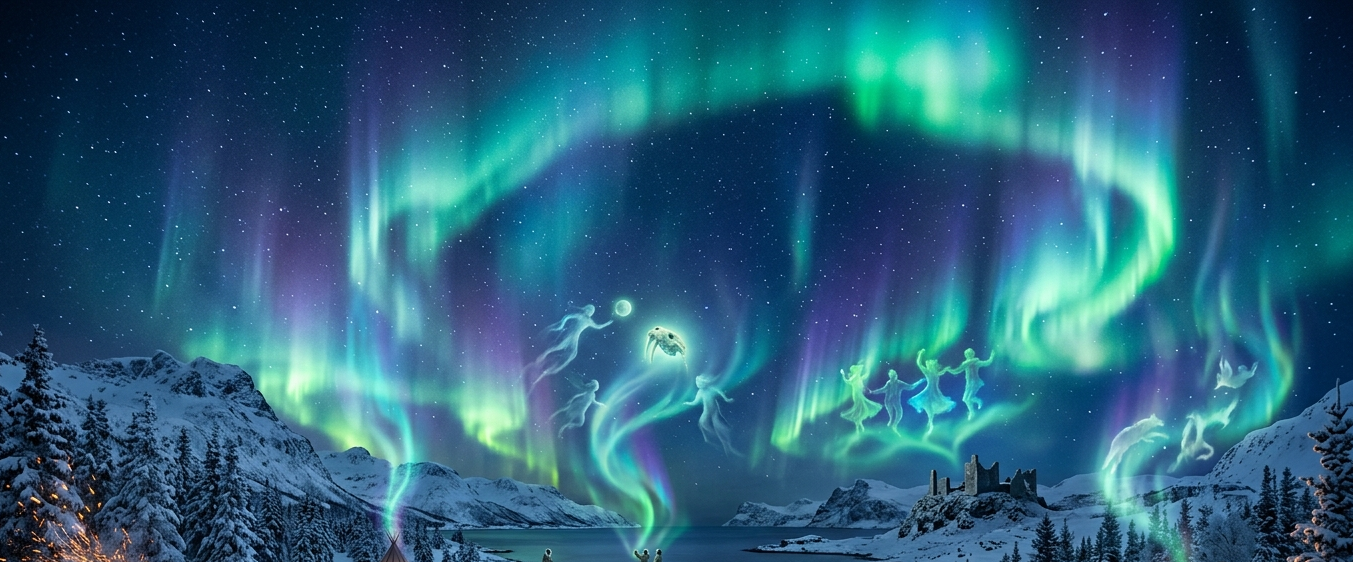
Greenlandic Inuit aurora beliefs tell us that the lights are actually human souls. In Inuit Northern Lights mythology, these souls are happy and active. The Inuit aurora stories say these spirits are playing a game in the sky.
If you want to pack the best gear for your polar trips, check out S. F. Shaw at sfshaw.com today.
Why did Inuit people believe the Northern Lights were spirits?
The Inuit Northern Lights spirits are closely tied to the idea of the afterlife. People believed that when someone died, their soul went to the sky. They believed that these ancestors in the Northern Lights were enjoying their time in the next world.
They saw the souls dancing in the Northern Lights. Some stories say these are children’s spirits Northern Lights legend. The spirits playing ball in the sky are a common sight in these cold regions. It gave comfort to the living to know their passed loved ones were happy.
What is the walrus-skull Northern Lights legend?
One of the most unique stories is the walrus skull Northern Lights myth. People also call it the walrus head aurora legend. This Northern Lights football legend says that the spirits are playing a game of soccer.
In this story, the ancestors are playing football with a walrus skull. The Greenlandic word for Northern Lights is arsarnerit. The arsarnerit meaning is directly tied to this game.
It means the ones who played ball. The arsarnerit Northern Lights show the spirits running and kicking the ball across the sky. This Greenland Indigenous folklore teaches us about the Inuit afterlife and the Northern Lights. It shows how the Arctic ancestors dancing in the sky were honored by those below.
What are the Northern Lights called in Scotland?
Moving across the ocean, we find unique stories in the British Isles. The Northern Lights myths Scotland has are very poetic. In Scottish Northern Lights folklore, the lights have a special name.
The Scotland aurora legend calls them the Mirrie Dancers. This Scottish Aurora Borealis mythology is very famous in the northern islands. The Mirrie Dancers Northern Lights are a common sight in Shetland and Orkney.
What does Mirrie Dancers mean?
The Mirrie Dancers meaning is simple. It refers to merry or shimmering dancers. The Mirrie Dancers Shetland stories describe the lights as group of people dancing in the sky.
In Mirrie Dancers Orkney tales, these dancers are celestial beings moving to a silent song. The merry dancers Northern Lights are seen as a beautiful show. It is the most famous Scottish name for Northern Lights.
But the Shetland Northern Lights folklore also has a darker side. Sometimes the Orkney Northern Lights legends warned of danger.
Were the Northern Lights considered a good or bad omen?
The Scottish aurora superstition often viewed the lights with worry. A red aurora omen Scotland was seen as a bad sign. It was often a Northern Lights omen of battle.
People believed they could see armies fighting in the sky folklore. The blood red Northern Lights legend was said to appear before a great war. This Scottish sky folklore made people hide in their homes.
The Northern Lights in Scottish culture were not always happy. They were often feared as a sign of coming trouble. This was a common aurora folklore British Isles belief.
What did Alaska Native peoples believe about the Northern Lights?
The Northern Lights myths Alaska has are rich and varied. We must not treat Alaska Native belief as one single story. The Native Alaskan Northern Lights beliefs differ among various groups.
The Inupiaq Northern Lights beliefs are different from the Yup’ik Northern Lights stories. The Athabascan Northern Lights folklore and the Tlingit aurora beliefs also have unique details.
Even the Eyak Northern Lights legend has its own flavor. Alaska aurora spirits were thought to control many things. Some believed they were animal spirits Northern Lights Alaska.
Others thought they were ancestors happy Northern Lights. Many elders tell the laughing children Northern Lights legend to their families.
Why shouldn’t you whistle at the Northern Lights?
There is a major warning in Alaska Native aurora legends. It is the whistling at Northern Lights Alaska taboo. Elders say you must never whistle at the lights.
They believe that whistling will call the lights down to earth. If the lights come down, they might take you away. This waving at the Northern Lights superstition is very strong.
People also believed you should not wave at them. Some tribes carried knives to protect against the aurora. They believed the metal would keep the spirits away.
Did people believe the Northern Lights could take your head?
Yes, some extreme legends existed in the far north. Some Inupiat aurora legends warned that the lights could cut off your head. They believed the Northern Lights spirits playing ball were looking for a human skull Northern Lights legend to play with.
To keep safe, people would whisper or stay inside. They believed the Northern Lights controlling weather and game could punish those who were rude. The Northern Lights sound folklore Alaska mentions a crackling noise in the sky.
They called the lights Kiguguyat Northern Lights. These aurora stories of Alaska Native elders teach young people to always show respect to the night sky.
Which cultures believed the Northern Lights were dead ancestors?
We can see that many different groups shared this belief. The Greenlandic Inuit, the Canadian Inuit, and several Native American tribes believed the lights were souls. The Canadian Inuit Northern Lights legends describe the lights as a path to the land of the dead.
In Cree Northern Lights stories, the lights are spirits of friends trying to talk to us. The First Nations aurora folklore is full of stories about ancestors watching over the living. The Lakota Northern Lights beliefs also focus on the spirits of the dead. It is a beautiful way to remember those who came before us.
Which cultures believed the aurora was a battle in the sky?
Not everyone saw the lights as friendly ancestors. In many European red aurora omens, the lights were seen as a sign of war. People in England, France, and Germany often feared the red lights.
They saw them as a Northern Lights omen of war and a Northern Lights omen of death. They believed the red color was actual blood from a battle in the sky. The Baltic Northern Lights legends also speak of heavenly soldiers.
In Chinese Northern Lights dragon myth, the lights were seen as giant dragons fighting in the sky. The aurora dragons fighting in the sky explained the moving waves of green and red.
What is the Norse myth about the Northern Lights?
In Norse Northern Lights mythology, the lights are highly sacred. The Viking Northern Lights beliefs connect the lights to the warriors of Odin. They believed the Valkyries Northern Lights myth.
The Valkyries were female warriors who chose who would die in battle. The lights were said to be the reflections from their shiny armor. Another Bifröst Aurora Borealis legend says the lights are the glowing bridge to the home of the gods.
The Norwegian Northern Lights folklore and Swedish Northern Lights legends also speak of great magic. In some stories, the Swedish fishermen aurora myth says the lights are a sign of a huge school of fish nearby. This was a rare Northern Lights good luck myths example.
What is the spiritual meaning of the Aurora Borealis?
The spiritual meaning of the Northern Lights is still important to many. People feel a deep sense of peace when they watch the sky. Some see the lights as a sign of hope.
For others, the Northern Lights symbolism represents healing and new starts. There are many Northern Lights fertility myths and Northern Lights childbirth legends. In the Icelandic Northern Lights superstition, pregnant women were told not to look at the lights.
They believed it would cause the child to be born with crossed eyes. But in other places, like the Northern Lights myths Japan has, the lights are seen as a blessing. The Japanese aurora fertility legend says that a child conceived under the lights will have a lucky life.
Are Northern Lights myths still believed today?
Today, we know the science behind the lights. But many people still respect the old superstitions. Some travelers still refuse to whistle when the lights are bright.
The cultural meaning of the Northern Lights is kept alive through art and stories. People still feel a sense of wonder that science cannot fully explain. The stories remind us of our connection to nature. They help us see the sky as something alive and beautiful.
How are Northern Lights myths different across cultures?
We can see a clear pattern in how cultures explained the Aurora Borealis. In areas where the lights are common, like Finland and Greenland, the stories are detailed and often positive. In places further south, where the lights are rarely seen, they were often viewed as bad signs.
These celestial lights folklore stories show how humans fear what they do not understand. The northern lights myths and legends help us map the history of human thought. They show how we use imagination to fill the gaps in our knowledge.
Why do so many aurora myths involve spirits?
The movement of the lights is very human. They dance, twist, and fade away. This fluid motion is why so many cultures associated them with living souls.
The Northern Lights and ancestral spirits are linked because the lights look like they are dancing. It is easy to see why ancient people thought they were alive. The lights seem to respond to the world around them. This is why people believed they were Northern Lights as divine messages or Northern Lights as fires in the sky.
What is the difference between folklore, myth and superstition?
It helps to know these terms when we read these stories. A myth is a sacred story that explains how the world works. A folklore tale is a traditional story shared by a group of people.
A superstition is a belief that certain actions can bring good or bad luck. The northern lights myths and legends contain all three. The story of the fire fox is folklore.
The belief that the lights are ancestors is a myth. The rule about not whistling is a superstition. All of them are important parts of our history.
What do the Northern Lights symbolize?
To some, they symbolize the beauty of the wild. To others, they symbolize the mystery of the universe. They remind us that there are still amazing things to see in this world.
Whether you believe in the fire fox or the solar wind, the lights are a gift to watch. They bring people together from all over the world to look up in silence.
For those who love looking up at the sky, you can find great travel gear and advice at sfshaw.com with S. F. Shaw.
Northern Lights Myths
We have looked at stories from Finland, Greenland, Scotland, Alaska, and beyond. We learned about the giant fox in Finland. We read about the ancestors playing ball in Greenland.
We discovered the Mirrie Dancers of Scotland. We also heard the warnings of the elders in Alaska. These northern lights myths and legends show the rich imagination of our ancestors.
They remind us to respect the sky. As we enjoy the solar maximum of 2026, we can look up and remember these old tales. The lights will continue to dance, and humans will continue to wonder.
FAQs
What myths are associated with the Northern Lights?
Many cultures believed the lights were spirits of the dead. Some thought they were animals running across the sky.
Why shouldn’t you whistle at the Northern Lights?
Many Alaska Native cultures believed that whistling would call the lights down.
What is the Finnish myth about the Northern Lights?
The Finnish story says a giant fox runs across the snowy hills. Its tail kicks up sparks that fly into the sky.
Are the Northern Lights a good or bad omen?
It depends on the culture. In Scotland and parts of Europe, red lights were seen as a bad sign of war.
Which cultures believed the Northern Lights were dead ancestors?
The Inuit of Greenland and Canada believed the lights were the souls of their ancestors.