
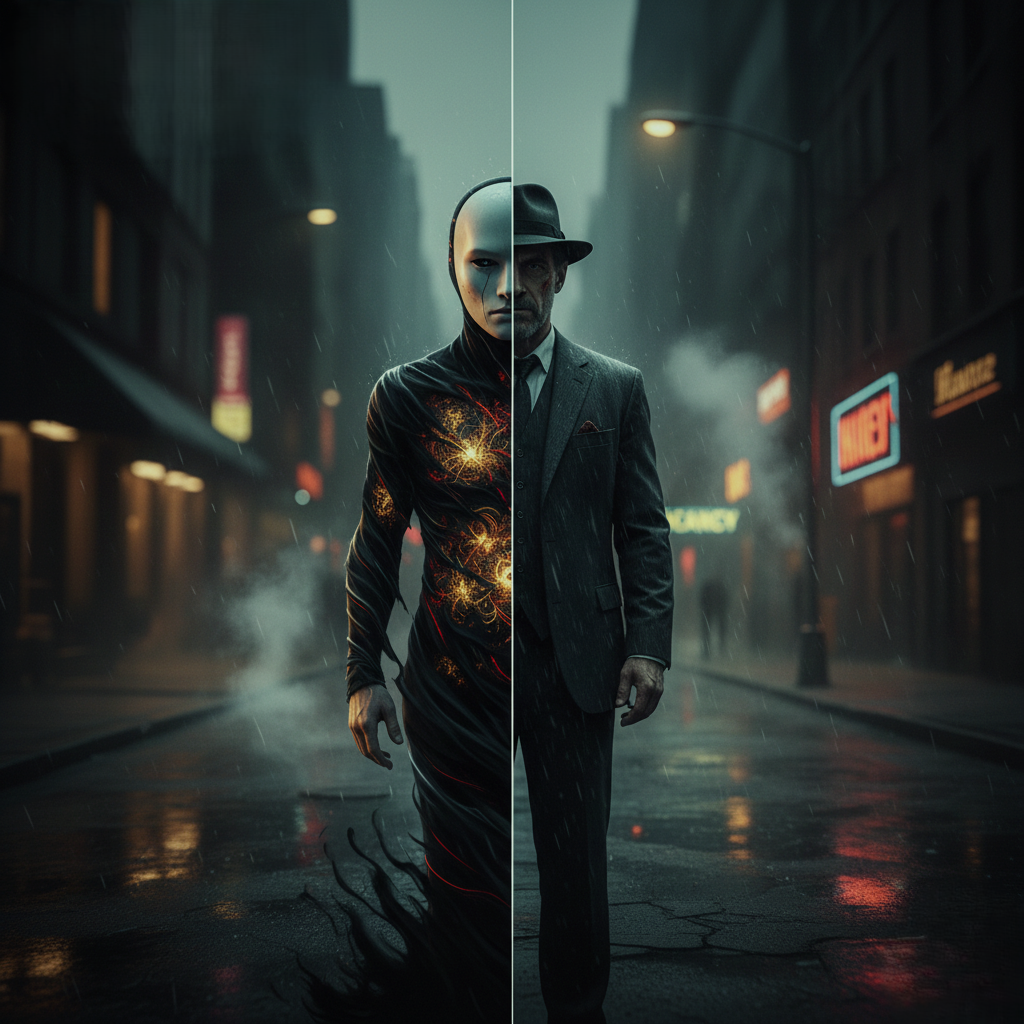
You know how shows like Breaking Bad became the highest-rated series on Netflix? People didn’t just love the plot, but they loved complex dark characters like Saul Goodman. This is the reason “Better Call Saul” went on to become one of the most successful prequels of all time. The Guardian ranked the show at 48 on its list of the 100 best TV shows of the 21st century. Also in 2021, it was voted the 23rd best TV series of the 21st century by the BBC. From Walter White to Saul Goodman, readers are drawn towards deeply flawed and morally gray characters. But why?
It is because they reflect the true complexity, flaws, and internal conflicts of human nature. Squeaky-clean heroes always do the right thing with little struggle, but dark heroes operate in shades of gray, displaying a reality that humans are not entirely evil or good.
Psychological Realism
In the light of psychological realism, it seems like we connect with dark characters because they mirror the parts of ourselves we struggle to acknowledge.
- The Shadow Self – According to Carl Jung, everybody possesses a shadow side to their personality, which comprises hidden, repressed tendencies, desires, and anger. The dark characters in a story, such as Heisenberg, a.k.a. Walter White, or Tony Soprano, showcase these sides safely.
- Catharsis and Relatability – The reason why dark characters perform these taboo, selfish, or violent actions is that they create a sense of catharsis. The reader can experience the breaking of social norms vicariously, which is more relatable than suppressing these thoughts in real life.
- Duality of Human Nature – Real people cannot be solely positive or negative, and dark characters with their mixture of positive and negative traits offer a better reflection of human duality.
I heard a lovely quote that fits the narrative: Goodness is often a performance, while darkness is an unfiltered truth.
What Makes Dark Characters Lovable?
This is not the world for heroes who transform the society with virtue. Humans have ambitions and desires and when a character kills these traits, it becomes unrelatable or less interesting. Here are a few reasons why people love dark characters.
Complex Backstories & Struggle
Dark characters are rarely born evil. They are often shaped by trauma, pain, or being wronged. Their stories are more entertaining because we learn about their descent and understand the pain behind their choices.
Goodness vs Broken Logic
Everyone, in this world, struggled to achieve success. When someone is destined to become a hero, the struggle finishes and the story becomes predictable and boring. With complex motivations and backstories, dark characters take the edge. They were not always good or bad like traditional villains and heroes, so it creates a sense of realism.
Challenging Status Quo
There are certain systems, rules, and regulations defined by every society or culture. In reality, people hate this. It’s human nature that they don’t want to be bound to a system, as it suffocates them. They feel like their independence is compromised. When traditional heroes follow the same social system, it means they are defending a broken status quo. However, dark characters tend to challenge or break that system, which feels relatable to readers who see injustice in their own lives. Such characters mostly operate outside this system, so this freedom from constraint is often envied by readers.
More Intriguing and Unpredictable
A good character’s options are limited due to their morality, which can make their behavior somewhat predictable. A character who is bad, or has a grey morality, has no such limitations and can perform unpredictable things.
Dark characters possess complex and intricate motivations that are not always straightforward. It requires the reader to delve deeper and not be spoon-fed or presented with a simple hero’s journey.