
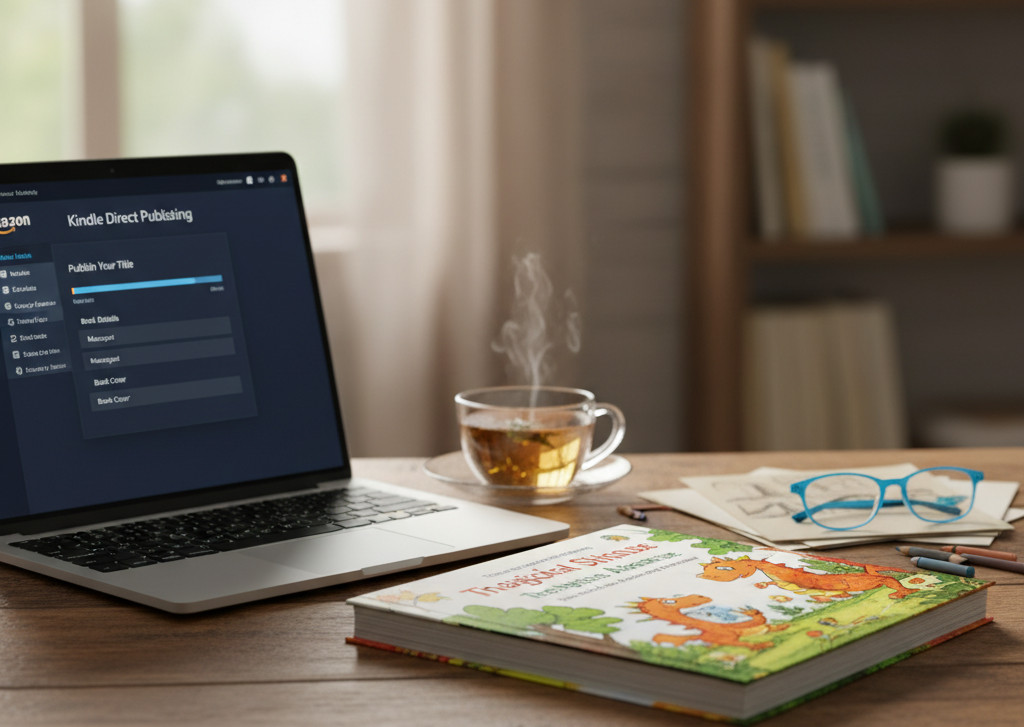
Do you have a great idea for a kids’ book? Many people dream of seeing their name on a colorful cover. You might think you need a big company to help you. But that is not true anymore. Today, anyone can share their stories with the world. If you are starting out, the path can feel a bit confusing. You have to think about writing, drawing, and how to get it into stores.
The truth is that the best way to publish a storybook depends on your goals. Some want to make money. Others just want a book for their family. In 2026, the market for kids’ books is bigger than ever. Experts say the global market will reach over 12.44 billion dollars this year. This means there are a lot of readers looking for new tales.
If you are a beginner, you likely want a way that is fast and does not cost too much. You want your book to look like the ones in the library. This guide will show you exactly how to do that. We will look at the tools and steps to go from a blank page to a finished book on a shelf.
How to write and publish a storybook for the first time?
Before you can print anything, you need a story that works. Writing for kids is different than writing for adults. You have to use simple words but big ideas. Every sentence must earn its place on the page.
First, you should pick a target age. A book for a three-year-old has very few words. A book for an eight-year-old has more plot. Once you know your audience, start your first draft. Do not worry about being perfect. Just get the ideas down. After that, you must edit. This is where the magic happens. You should read your story out loud. If you stumble on a word, a child will too.
Next, you need to think about the pictures. In a storybook, the art tells half the tale. If you are not an artist, you can hire one. Many first-time authors find great artists on sites like Reedsy or Upwork. Make sure the style fits your message. A funny story needs bright and silly art. A bedtime story might need soft and calm colors.
Beginner guide to publishing a children’s storybook
Once your story and art are ready, you reach the big choice. You have to decide between self publishing vs traditional publishing for beginners.
Traditional publishing is when a big company buys your book. They pay for everything. They do the editing, the art, and the selling. This sounds great, but it is very hard to get. You often need an agent. It can also take two or more years to see your book in a store.
For most people, the easiest way to publish a book for first-time authors is self-publishing. This means you are the boss. You keep all the rights. You also get more money from each sale. The best part is that you can publish in just a few weeks. You do not have to wait for someone to say yes to your dream.
How to self publish a storybook for beginners using online tools?
The internet has changed everything for writers. You no longer need a printing press in your garage. You can use a self publishing guide to walk you through the tech side. The most popular choice is print on demand. This means a book is only printed when someone buys it. This saves you from buying 1,000 books and keeping them in your attic.
Platforms like Amazon KDP and IngramSpark are the leaders here. They take your digital files and turn them into real books. You just upload your manuscript and your cover. They handle the rest. This is why many people say it is the easiest way to publish your first storybook online.
How to publish a book on Amazon KDP step by step?
Amazon is the biggest bookstore in the world. Using Kindle Direct Publishing (KDP) is free. You only pay a small fee when a book sells. Here is a simple breakdown of the process.
First, you must format your book. This means making sure the pages are the right size. For kids’ books, common sizes are 8.5 x 8.5 inches or 8 x 10 inches. You need a file for the inside and a file for the cover.
Second, you set up your account. You will enter your name and where to send your money. Then, you create a “New Title.” You will type in your book details. This includes the title, a description, and keywords. Keywords help people find your book when they search.
Third, you upload your files. Amazon has a tool called “Print Previewer.” It shows you exactly what the book will look like. If something is off, you can fix it before you hit the “Publish” button. Within 72 hours, your book will be live for the whole world to see.
Cost to publish a storybook for beginners in 2026
How much money do you really need? This is a question every beginner asks. You can technically publish for free, but your book might look “cheap.” If you want to compete with the big guys, you should invest a little.
In 2026, a professional-looking book usually costs between $2,000 and $4,000. This pays for a good editor and a custom cover. If you do some things yourself, you might spend less than $500. However, never skip on editing. A book with typos will get bad reviews fast.
Here is a quick look at common costs:
- Editing: $500 to $1,500
- Cover Design: $200 to $800
- Illustrations: $1,000 to $5,000
- Formatting: $0 to $300
S. F. Shaw helps authors create amazing stories that last a lifetime.
Easiest way to publish a book for first-time authors without a publisher
If you want to skip the gatekeepers, you are an indie author. This path gives you total control. You decide the price. You decide when it goes on sale. You even get to choose the paper type.
To succeed as an indie author, you need a plan. You are not just a writer. You are also a marketer. You need to tell people about your book. Social media is a great place to start. You can share “behind the scenes” photos of your writing process. This builds a group of fans before the book even comes out.
How to publish your first storybook online for global reach?
Selling your book online is the best way to reach kids in different countries. With one upload, your story can be read in the UK, the US, and the UAE.
You should make sure you have an ebook version. While kids love physical books, ebooks are great for travel. They are also cheaper for readers to buy. When you use Amazon, they automatically offer your book in many different countries. You don’t have to do any extra work to go global.
What is the best way to publish a storybook without a publisher and keep your rights?
When you work with a traditional publisher, you often sign away your rights. This means they own the story for a long time. If you publish a book without a publisher, you own everything.
This is important if you want to make a movie or a toy based on your character later. You don’t have to ask for permission. You keep 100% of the creative control. This freedom is why many famous authors are now choosing to self-publish their new works.
Self publishing vs traditional publishing for beginners
Let us compare the two paths clearly.
Traditional publishing gives you prestige. It puts your book in big stores like Barnes & Noble. But you get less money (usually 10% of sales) and it takes forever.
Self-publishing gives you speed and more money (up to 70% of sales). But you have to pay for the work upfront. You also have to do your own marketing. Most beginners today find that self-publishing is the better way to start. It lets you learn the business while building your brand.
Book publishing tips for beginners to avoid common mistakes
Many first-time authors fail because they rush. They finish the story and want it online that same day. This is a mistake.
First, get an ISBN number for books. An ISBN is like a social security number for your book. It helps libraries and stores track it. Some platforms give you a free one, but it is better to buy your own. This makes you the official publisher of record.
Second, think about book metadata optimization. This sounds fancy, but it just means using the right words in your title and description. You want to use terms that parents search for, like “bedtime story for toddlers” or “educational book about space.”
Third, focus on your author platform. Start a website or a newsletter. This gives you a way to talk to your readers directly. If you write a second book, you already have people who want to buy it.
“A book is a gift you can open again and again.” — Garrison Keillor
Manuscript preparation and book formatting for a clean look
Your manuscript must be neat before you upload it. For a storybook, this means matching the text with the images. You need to decide where the page breaks will go.
Formatting for print is different than formatting for digital. For print, you need “bleed.” Bleed is extra space around the edges of your art. It ensures that when the book is trimmed, there are no white gaps at the edges. Professional tools like Adobe InDesign or free tools like Canva can help with this.
Book cover design
It is a sad truth that people judge books by their covers. This is even more true for kids. A cover must grab their eye in one second.
A good cover has a clear title. It uses colors that pop. It also shows a bit of the main character or the world. If your cover looks like it was made in a simple word program, no one will click on it. Spend the extra money to get a real designer. It is the best investment you can make.
ISBN number for books
Yes, you do. If you want to sell your book in stores or to libraries, you need an ISBN. While some sites like Amazon give you a free “ASIN,” that only works on Amazon. To be a professional author, buy a 10-pack of ISBNs from Bowker (in the US) or your local agency. It shows that you are serious about your career.
Editing and proofreading
You cannot see your own mistakes. Your brain knows what you meant to write, so it skips over typos. You must hire a human editor.
There are different types of editing. Developmental editing looks at the story itself. Does it make sense? Is the ending satisfying? Copyediting looks at the grammar. Proofreading is the final check for tiny errors. Even the best writers in the world have editors. You should too.
Book marketing strategies for indie author publishing
How do people find your book? You need a plan.
One great way is to get reviews. Reach out to book bloggers or “bookstagrammers.” These are people who read and review books for their fans. Give them a free copy in exchange for an honest review.
You can also use Amazon ads. These let you show your book to people who are already looking for similar titles. It can be a very cheap way to get your first few sales.
Remember, marketing is not about shouting at people. It is about finding the people who will love your story and telling them it exists.
Book distribution channels: Where to sell your work?
Don’t just sell on one site. Use wide distribution. This means putting your book on Apple Books, Google Play, Kobo, and Barnes & Noble.
Tools like Draft2Digital can send your book to all these places at once. This saves you from making ten different accounts. The more places your book is available, the more likely someone is to find it.
Royalties and book sales
When you self-publish, you get a “royalty.” This is your share of the sale price. On Amazon, if your ebook is between $2.99 and $9.99, you get 70%. For print books, you usually get 60% minus the cost to print the book.
For example, if your book costs $10 and it costs $3 to print, you get $3 per sale. That is much more than the $0.50 or $1.00 you might get from a traditional publisher.
Book metadata optimization for fast indexing
To rank on search engines like Google and Bing, you need good metadata. This includes your title, subtitle, and keywords.
Use words that describe the “vibe” of your book. Is it a “heartwarming story”? Is it a “funny adventure”? These words help the search robots understand who should see your book. This is how you get fast indexing and stay visible in a crowded market.
Visit sfshaw.com to discover new worlds through the power of reading.
Latest 2026 stats for the children’s book industry
The world of books is changing fast. Here are some numbers from this year:
- Over 50% of the top 100 books on Amazon are for children.
- Graphic novels for kids are growing at a rate of 4.8% each year.
- 76% of readers still prefer physical print books for their children over digital ones.
- Audiobooks for kids have seen a huge jump, growing by 22%.
These stats show that parents still value the feel of a real book in their hands. This is good news for you if you want to make a beautiful hardback or paperback.
How to become an author and build a long career?
Writing one book is a great start. But becoming an author is a long journey. You should always be thinking about your next story.
Most successful indie authors have a series. Once a child likes one character, they want to read every book about them. This makes your marketing easier because one fan becomes a repeat customer.
Keep learning. Read books in your genre. See what is popular and why. Talk to other writers. The more you know, the better your books will be.
Traditional vs self-publishing
If you are a beginner, self-publishing is the clear winner. It removes the barriers. You don’t have to wait years for a “maybe.” You can start your business today.
Traditional publishing still has its place for authors who want to be in every airport bookstore and have a big PR team. But for most creators, the freedom and money of self-publishing are too good to pass up.
Final Words
Publishing a storybook as a beginner is an exciting adventure. It takes hard work and some learning, but it is a dream you can reach. By choosing the right path and focusing on quality, you can create something that brings joy to children all over the world. Don’t let fear stop you. Your story deserves to be told. Start your journey today and see where your imagination takes you.
FAQs
Can a beginner publish a storybook?
Yes, anyone can publish a book today. With tools like Amazon KDP, the process is simple and open to everyone. You just need a finished manuscript and a cover.
How much does it cost to publish a storybook?
It can cost anywhere from $0 to $5,000. Most professional beginners spend about $2,000 to $3,000 on editing, art, and formatting to ensure the book looks high-quality.
Is self publishing worth it for beginners?
Yes, it is very worth it. You keep your rights and earn more money per sale. It is also the fastest way to get your work into the hands of readers.
How long does it take to publish a book?
In self-publishing, you can go from a finished file to a live book in 24 to 72 hours. Traditional publishing can take 18 months to 2 years.
Do I need an ISBN to publish a book?
If you want to sell your book in stores or libraries, you need an ISBN. While some platforms offer free ones, buying your own is better for your professional brand.
Where can I publish my first storybook?
Amazon KDP is the most popular place. You can also use IngramSpark for better reach in bookstores or Draft2Digital for wide ebook distribution.
What is the easiest platform to publish a book?
Amazon KDP is widely considered the easiest. The interface is simple, and they provide many free tools to help you format and design your book.
Do I need a lawyer to publish my book?
No, most beginners do not need a lawyer. Self-publishing platforms have standard terms you agree to. If you get a traditional contract, you might want a literary agent or a lawyer to look at it.
How do I get my book into libraries?
The best way is to use a distributor like IngramSpark. They have a catalog that librarians use to order books. You also need an ISBN and a professional look.
Can I publish a book for free?
Yes, you can upload your files to Amazon KDP for free. However, you will still need to spend time (or “sweat equity”) on the writing and design if you don’t hire help.